
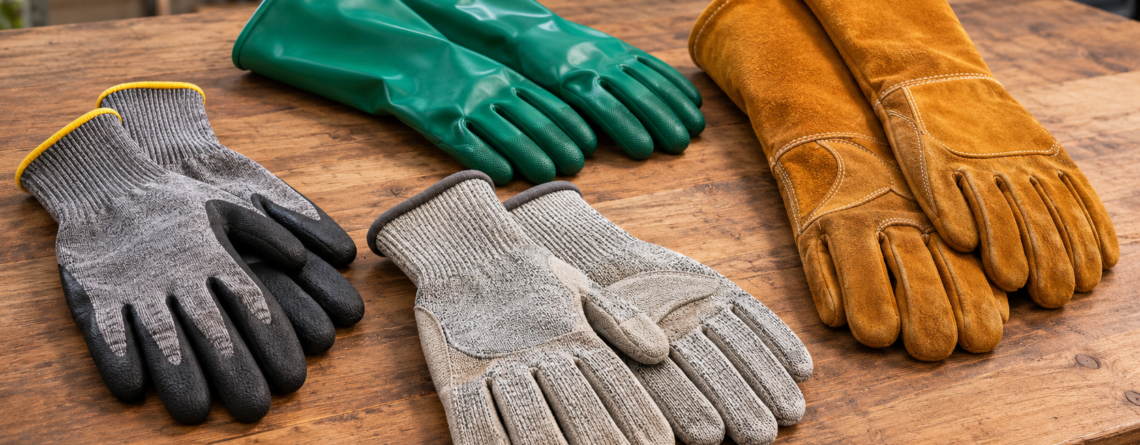
Safety Gloves Explained: Choosing the Right Pair for the Job
From handling deliveries to working with metal, heat or cleaning products, different tasks expose hands to different hazards.
No single glove protects against every workplace risk. The right choice depends on the task, the material being handled and the protection confirmed by the manufacturer.
Start with the task
Before buying gloves, identify the hazards and how long workers will be exposed. Consider cuts, abrasion, punctures, heat and chemical contact, alongside the grip and finger movement needed to work safely.
A useful question is: What must this glove protect against during this specific job?
Understand the main glove categories
| Workplace task | What to check before buying |
|---|---|
| General handling and warehouse work | Abrasion resistance, suitable grip, fit and dexterity |
| Handling sharp-edged materials | Tested cut resistance and any separate puncture protection needed |
| Welding or handling hot materials | Protection rated for the particular heat, sparks and work process |
| Cleaning or chemical handling | Compatibility with the exact chemical, concentration and contact conditions |
These categories are a starting point. Check the individual product’s performance data: protection against one hazard does not establish protection against another.
Look beyond “chemical resistant”
A chemical-resistant label does not mean a glove is suitable for every substance.
Check the product’s Safety Data Sheet and the glove manufacturer’s chemical-resistance information. Consider the chemical concentration, temperature, contact duration and whether exposure involves splashes or immersion.
Manufacturers may provide data on breakthrough time, permeation and degradation. Use that information to establish suitable gloves and replacement intervals for the actual task. Chemical penetration may occur without visible damage, so appearance alone is not a reliable safety check.
Choose a fit that supports the work
Gloves should allow workers to grip materials and carry out the required movements without excessive tightness or loose fingertips.
Provide suitable sizes and check the cuff length where wrists or forearms also need protection. Let workers assess fit and dexterity before placing a large order.
Recognise machinery hazards
Gloves can create an entanglement risk around exposed rotating parts. Avoid wearing them when operating equipment such as bench drills where they could become caught, and follow the machine’s operating instructions and task-specific safety assessment.
Plan inspection and replacement
Inspect gloves before use and remove damaged or unsuitable pairs from service. Follow manufacturer instructions for cleaning, storage, reuse and replacement.
Workers handling harmful substances also need to know how to remove contaminated gloves without transferring the substance onto their skin.
Choose hand protection with Unique Safety
Planning a safety glove order for your business? Share your tasks, required protection, sizes and quantities with Unique Safety.
Explore our hand protection range and enquire about product specifications and availability at uniquesafety.ae.

